With global trade turbulence, rising US tariffs, geopolitical tensions, and softening demand creating significant headwinds for economies worldwide, many markets are facing heightened uncertainty and preparing for the potential impact on growth and business activity. Across industries, companies are navigating a more challenging environment as global trade conditions continue to evolve.
Yet, even in periods of heightened uncertainty, many businesses in the UAE have continued to demonstrate remarkable resilience. Despite regional geopolitical tensions and evolving global market conditions, businesses have adapted quickly, maintained operational continuity, and identified new growth opportunities. Their ability to remain agile, supported by the UAE’s stable business environment and strategic location, has enabled many organisations to sustain confidence and momentum when businesses in other markets have faced greater disruption.
At a time when uncertainty dominates global conversations, understanding how businesses in the UAE have adapted and remained resilient provides valuable insights into navigating economic challenges, managing risk, and building long-term sustainable growth
Reading the Numbers: Where the UAE Stands Right Now
The S&P Global UAE Purchasing Managers’ Index (PMI) fell to 53.3 in May 2025, down from 54.0 in April, marking the softest pace of growth in the UAE’s non-oil private sector in nearly four years. At first glance, that may seem concerning. However, the broader picture tells a different story.
Despite the decline, the PMI remained comfortably above the 50.0 “no-change” threshold, indicating that the sector continues to expand rather than contract. While growth has moderated, the fact that expansion is being maintained in today’s challenging global environment highlights the underlying strength and resilience of the UAE economy.
Dubai’s performance further supports the outlook. The Dubai PMI remained steady at 52.9, while new orders climbed to a four-month high. This increase was driven by stronger client confidence and competitive pricing, reinforcing the continued momentum within the market despite a more measured pace of overall growth. But resilience isn’t accidental-it’s being actively engineered by businesses on the ground.
Why UAE Businesses Continue to Demonstrate Resilience
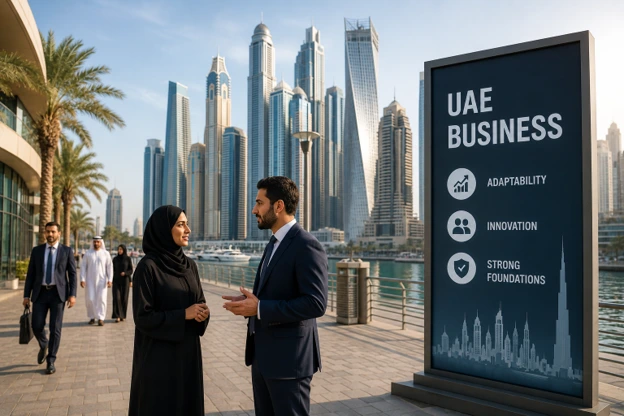
One of the key reasons businesses in the UAE have remained resilient is the country’s long-term economic vision. Over the years, the UAE has deliberately diversified its economy to reduce dependence on a single sector. Today, industries such as technology, logistics, tourism, finance, and international trade all contribute significantly to economic growth. Combined with its strategic location between Asia, Europe, and Africa, world-class logistics infrastructure, and business-friendly policies that encourage entrepreneurship, foreign investment, and innovation, these structural strengths continue to support business confidence and long-term growth.
Beyond these structural advantages, resilience is also being driven by how businesses are responding to changing market conditions. Three key factors stand out:
- Demand-side strength: Despite global trade disruptions and economic uncertainty, companies continue to report growth in new orders. Strong client demand, effective marketing initiatives, and diversified product offerings have helped businesses attract and retain customers, providing a stable foundation for continued growth.
- Smart inventory management: Businesses are taking a more disciplined approach to inventory management. The recent decline in input stocks reflects strategic planning rather than caution, as firms optimise inventory levels, improve working capital efficiency, and remain agile in response to evolving market conditions.
- Employment momentum: Employment has increased at its fastest pace in a year, highlighting continued business confidence. Companies are expanding their workforce to meet growing workloads and prepare for future demand, signalling a positive medium-term outlook rather than a defensive response to uncertainty.
Together, these structural advantages and operational strategies have enabled many businesses in the UAE to remain agile, sustain confidence, and continue pursuing growth opportunities despite an increasingly uncertain global economic environment.
Global Confidence with Measured Caution
- Inflation Moderation Strengthens Business Stability
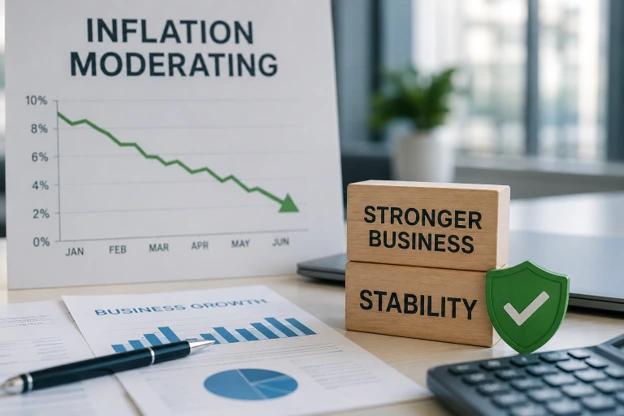
Input cost inflation eased to its lowest level since December 2023, with only five per cent of firms reporting an increase in costs. The rise in expenses was largely linked to higher prices for raw materials and transportation. In a year marked by uncertainty and ongoing pressure on margins, this moderation in cost inflation provides businesses with valuable breathing room and greater flexibility in managing their operations.
At the same time, selling prices increased only marginally. While some companies chose to pass on a portion of their higher costs to customers, others offered discounts to preserve their competitive position and support demand. This balanced approach highlights the flexibility with which UAE businesses are managing pricing decisions in a changing market environment.
Rather than reflecting financial strain, the ability to adjust pricing strategies based on market conditions demonstrates a measured and mature approach. The pricing flexibility being exercised by UAE businesses points to strategic decision-making and adaptability, rather than desperation, as companies continue to navigate evolving economic conditions.
- Global Confidence with Measured Caution
Despite ongoing global trade uncertainty, UAE businesses remain among the most optimistic in the world. According to HSBC’s 2025 Global Trade Pulse Survey, 94% of UAE businesses expect growth in cross-border trade, placing them ahead of many of their global counterparts. This confidence is particularly notable at a time when businesses worldwide continue to face trade disruptions, rising costs, and geopolitical uncertainty.
While nearly two-thirds of businesses globally report higher costs resulting from trade-related uncertainties, UAE companies continue to pursue international growth. Although tariffs have increased operational expenses by an average of 7%, businesses are responding proactively through advanced planning, digital transformation, and market diversification. Rather than allowing external pressures to dictate their growth trajectory, companies are adapting their strategies to maintain competitiveness and seize new opportunities.
At the same time, optimism has become more measured. Business confidence for the year ahead has moderated, with only 10% of surveyed firms expecting expansion—the lowest reading since January 2025. This more cautious outlook is also reflected in lower input stock levels, suggesting that businesses are placing greater emphasis on operational efficiency, disciplined planning, and prudent resource management. Rather than signalling weakness, this measured approach reflects businesses balancing near-term uncertainty with confidence in their longer-term growth prospects.
How Businesses Can Build Long-Term Resilience
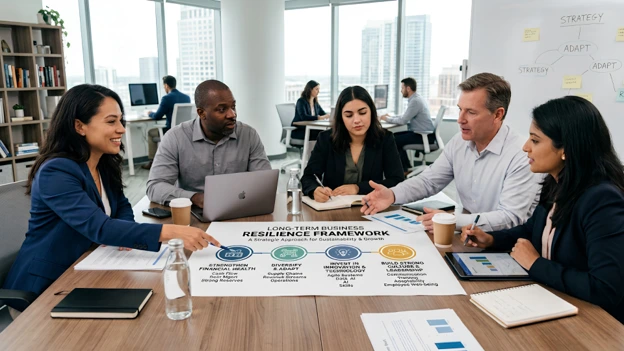
The findings highlight that resilience is not simply the result of favourable market conditions-it is built through proactive planning, operational discipline, and strategic decision-making. Based on the trends observed, businesses can strengthen their resilience by focusing on four key priorities:
- Diversify Revenue Streams
Expanding across multiple products, customers, or geographic markets reduces dependence on a single source of revenue and helps mitigate the impact of tariffs, geopolitical disruptions, and demand volatility. Businesses that entered periods of uncertainty with diversified market exposure have been better positioned to sustain growth and seize new opportunities.
- Optimise Inventory and Cash Flow
The sharp decline in input stocks demonstrates that resilient businesses are managing inventory with greater precision rather than simply reducing spending. Aligning inventory with demand, improving working capital efficiency, and maintaining healthy cash flow enable businesses to remain agile while avoiding unnecessary costs.
- Continue Investing in People and Technology
Businesses that continue to invest in talent and digital capabilities are better equipped to respond to changing market conditions. The rise in employment reflects confidence in future demand, while investments in automation, digital tools, and process improvements strengthen productivity and long-term competitiveness.
- Plan for Sustainable Growth
While business activity has moderated, economic indicators continue to point towards expansion rather than contraction. Businesses should calibrate their plans for a slower pace of growth, maintain realistic expectations, and build contingency plans that allow them to respond quickly as market conditions evolve. A measured, long-term approach will enable businesses to remain resilient while continuing to pursue new opportunities. Ultimately, the experience of UAE businesses demonstrates that resilience is not about avoiding uncertainty-it is about preparing for it. Companies that diversify, operate efficiently, invest strategically, and remain adaptable will be best positioned to navigate future challenges and achieve sustainable long-term growth.
Combined image
Business Implications
These insights are particularly relevant for businesses operating in sectors exposed to changing market conditions and global trade dynamics. Retailers, trading companies, manufacturers, logistics providers, importers, and exporters can benefit from strengthening inventory management, improving operational efficiency, and diversifying markets to better manage risk.
The findings are equally valuable for SMEs, business owners, and decision-makers seeking to build financial resilience, improve strategic planning, and sustain long-term growth. For investors and entrepreneurs, the resilience demonstrated by businesses in the UAE reinforces the country’s attractiveness as a destination for investment and business expansion, even amid an increasingly uncertain global environment.
Conclusion
Global economic challenges such as US tariffs, supply chain disruptions, and weaker demand are impacting businesses worldwide. Despite these pressures, UAE businesses continue to show resilience through adaptability, strategic planning, and diversification.
At MBB Auditing, we help businesses strengthen financial controls, manage risks, and stay compliant, enabling them to navigate uncertainty with confidence and focus on sustainable growth.